

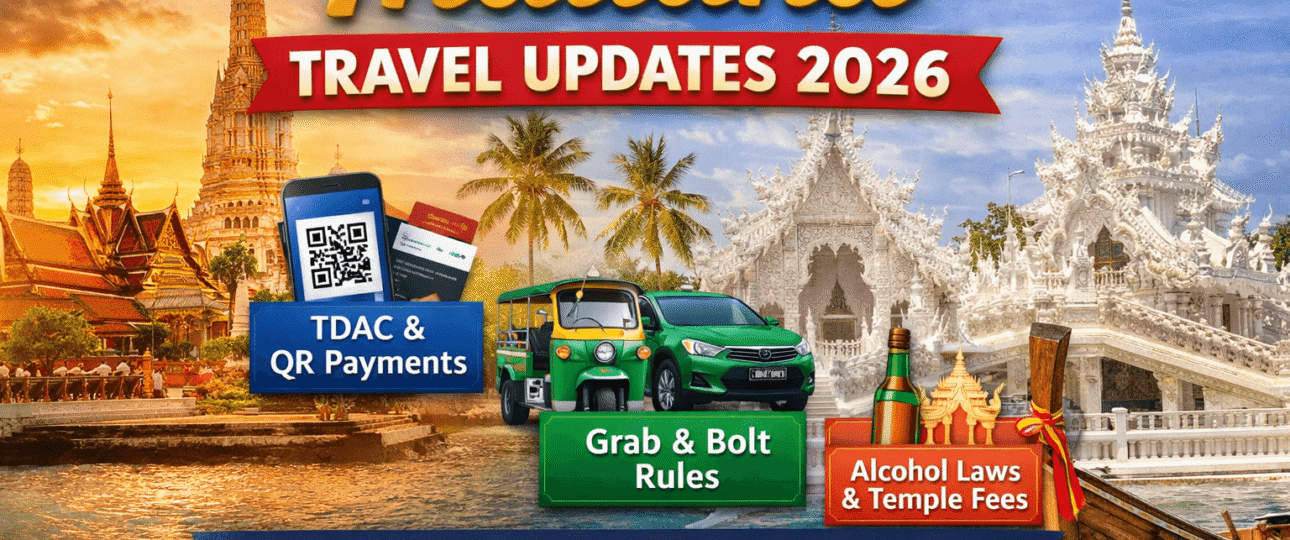
Published: 20 January 2026 | Latest changes & practical tips
Thailand continues to be one of the world’s favourite travel destinations in 2026. From its tropical beaches and rich culture to temples and incredible food. But several important policy and travel rule changes have rolled out recently that every traveller should know before packing their bags.
📌 1. Thailand Digital Arrival Card (TDAC) – Mandatory Entry Requirement
Thailand has replaced the old paper TM6 arrival/departure card with a fully digital system called the Thailand Digital Arrival Card (TDAC).
✔️ All foreign visitors arriving by air, land, or sea must complete it online within 72 hours before arrival.
✔️ You receive a QR code that you must present at immigration upon entry.
✔️ It’s free of charge, but must be completed for all travellers, including children.
Tip: Complete your TDAC on the official Thailand Immigration Bureau site before your flight to avoid long queues at the airport.
What it replaces: the old paper TM6 form — no more pens or manual forms!
🛂 2. Tourist Entry Fee (Kha Yeap Pan Din) – Delayed
Thailand had proposed a foreign visitor entry fee commonly called Kha Yeap Pan Din (“stepping onto Thai soil”) — expected to charge 300 baht for air arrivals and 150 baht for land/sea arrivals.
However, implementation has been postponed to mid-2026 (Q2–Q3), and as of January 2026 tourists still do NOT pay this national entry fee yet.
The fee is expected to support tourism infrastructure and basic visitor insurance, but exact details are still being finalised.
📊 3. Visa Policies & Entry Tips
🪪 Visa-Free Entry
Citizens of many countries — including India — continue to enjoy visa-free entry for short tourism stays (usually up to 60 days). Immigration may still require proof of onward travel and accommodation details.
💸 Proof of Funds
Thailand reinstated rules requiring financial proof for visa applications (often cited as ~20,000 baht availability) for tourists applying for visas prior to travel. This means during visa application you might need to show bank statements or sponsoring evidence.
In practice, routine on-the-spot cash checks are rare, but immigration can ask for proof — especially for longer stays or unclear travel plans.
🧳 Frequent Re-Entry Myths
There have been rumours about limiting visa-free entries (like “only twice a year”). Officials confirmed no such rule exists — standard visa and immigration laws apply.
🚕 4. Ride Apps: Grab & Bolt — Verification Rules Updated
Ride-hailing apps like Grab and Bolt are widely used by travellers in Thailand (Bangkok, Chiang Mai, Phuket, Pattaya and more).
🚗 Recent policy changes now require:
- Driver verification (license and details shown in the app)
- Passenger verification via SMS, passport photo upload, and selfie confirmation
This enhances safety but may mean slightly longer wait times, especially during peak hours or at airports/hotels.
Tip: Set up your account and complete verification before arrival or right after landing while on hotel Wi-Fi.
📱 5. Digital Payments & QR Codes for Tourists
Thailand’s digital ecosystem is evolving quickly. Tourists can now use QR payment systems in many places:
🇹🇭 QR Payments
- Most local vendors and street food stalls accept QR payments (especially in cities).
- Tourists can use the TAGTHAi app (Easy Pay) and other payment networks to pay via QR.
- Chinese travellers benefit from Alipay or WeChat Pay acceptance.
Reality check: Cash is still essential in smaller towns, markets, and some rural areas — carry 1,000–2,000 baht in small notes.
🍺 6. Alcohol Rules & Service Hours
Thailand has updated its alcohol regulations recently:
✔️ The afternoon alcohol ban (2–5 PM) that was attempted has been scrapped after public feedback.
✔️ You can buy and consume alcohol between 11:00 AM and Midnight at most venues.
✔️ Sales remain prohibited from Midnight–11:00 AM in regular shops and stores.
Exceptions:
- Airport lounge bars (after security)
- Licensed hotel bars and in-room service
- Nightclubs with specific permits
Responsible drinking: Some places legally require venues to check for age (20+ years) and refuse service if a patron appears intoxicated.
🛕 7. Temple Entry Fees & Sightseeing Costs
🏯 White Temple (Wat Rong Khun) Entry Fee
One of Thailand’s most iconic temples, the White Temple in Chiang Rai, doubled its foreign entry fee in 2026:
Foreign visitors: 200 baht
Thai citizens: Still free
This helps fund maintenance and new attractions like the “Cave of Art.”
Tip: Some popular temples and parks have dual pricing (locals cheaper or free), so budget a bit more for entry fees if your itinerary includes several sights.
🎒 8. Travel Safety & Other Practical Tips
- Security measures near border provinces have been strengthened, but tourism in major areas is operating normally.
- Check weather advisories or flooding alerts, especially in southern Thailand during monsoon-affected months.
- Always use licensed taxis or app-based rides for safe and regulated transport.
🧠 Quick Summary – What You Must Do Before Travel
✅ Complete the TDAC online at least 72 hours before arrival.
✅ Set up Grab/Bolt and verify your account.
✅ Have sufficient cash and digital payment options.
✅ Budget for certain entry fees (e.g., Wat Rong Khun).
✅ Respect alcohol service rules and local laws.
🌴 Final Thought
Thailand remains a traveller-friendly, vibrant destination in 2026 — but some modernisations and regulatory updates mean smarter planning leads to smoother trips. Follow this guide, stay updated, and you’ll enjoy the Land of Smiles like never before!
Planning Thailand with expert support? Our team can assist with visas, hotels & customised packages.